
Are the Rice Ceremony and Annaprashan the same?

Many Indians consider it a significant event for a baby to have their first solid-food ceremony. It is celebrated with prayers and blessings, traditional activities, and a special family gathering. Rice Ceremony and Annaprashan are two terms that are frequently used for this occasion.
Both ceremonies are connected with the baby's first solid food intake and are often considered the same. In many families, that is perfectly appropriate. The significance and traditions may differ from community to community and from region to region. The traditional Sanskrit term of the ceremony in which a baby is introduced to solid food is annaprashan. The term is connected with the first feeding of food, especially rice or a rice-based concoction.
The term "rice ceremony" is a more widely used English term. It generally means giving the baby rice or other solid food for the first time in a ceremony. So, while the two terms often describe the same milestone, they can have slightly different cultural meanings.
What Is Annaprashan?
Annaprashan is a traditional Hindu ceremony celebrating a baby’s transition from a milk-only diet to solid food. It is usually done when the child is a few months old, though the specific age varies by family and tradition. It is common to have a prayer or puja after which the baby is fed symbolically. On the first feeding, rice, kheer, or any soft, easily digestible food can be utilized.
The event is not just about introducing a new food. Ithered around the baby to bless them and to wish them a happy, healthy, prosperous, and good life. The ceremony can be held at home, in a temple, or at another location depends on family tradition.
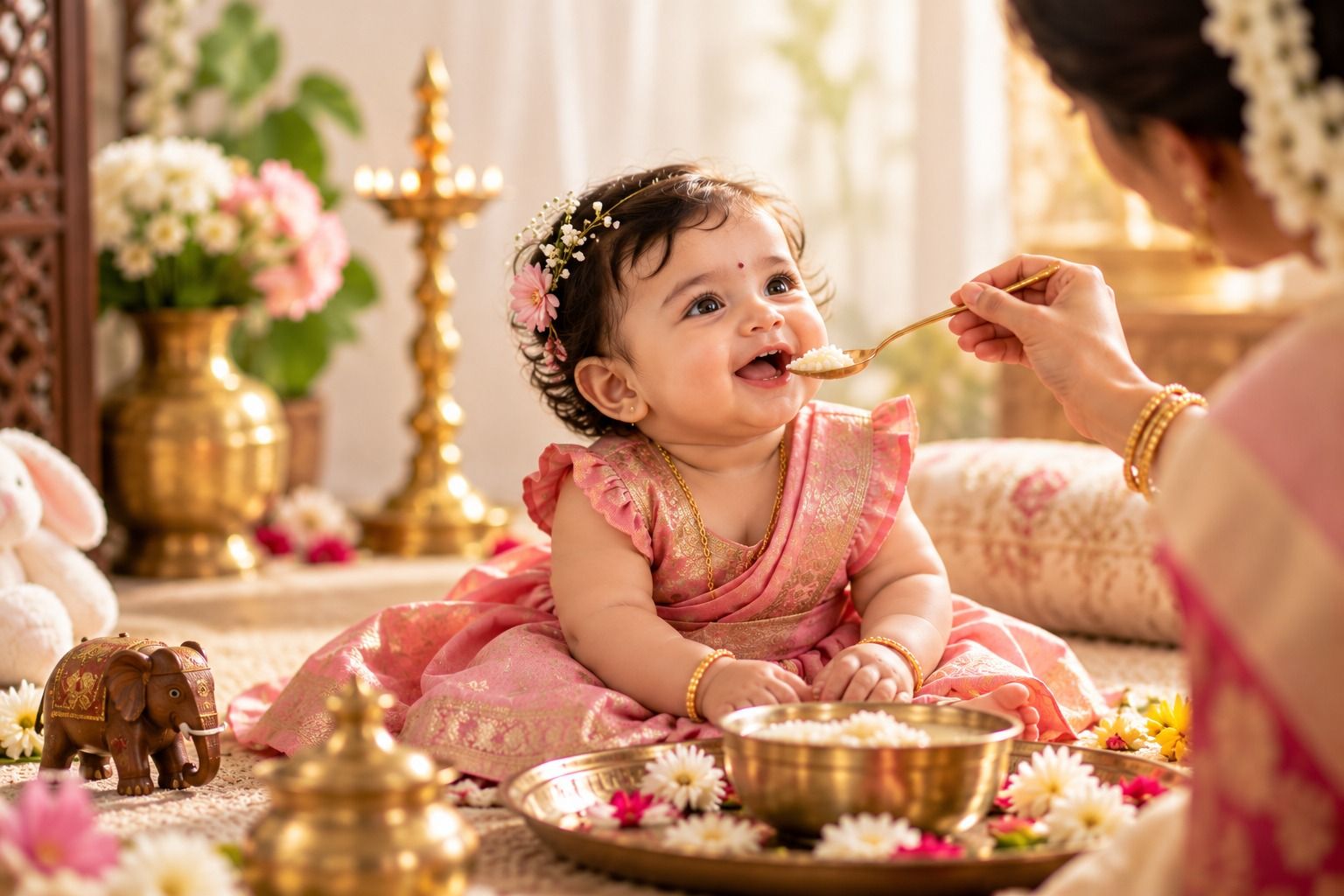
How Does the Ceremony Differ Across India?
Annaprashan does not look the same in all parts of India, as there are many different cultural traditions. The ceremony can also be called Annaprashan or Annaprashan Sanskar in some places in North India. Families can arrange a puja and then have the baby's first ceremonial meal.
In Bengal, the same practice is referred to as 'Mukhe Bhaat,' or roughly 'putting rice in the mouth.' An important family event may involve traditional dress, rituals, meals, and photos. Rice may be ceremoniously offered to the child in ceremonies in Kerala and other South Indian groups for the first feeding of the baby, called choroonu.
Different communities may therefore use different names and follow different rituals while celebrating a similar developmental milestone.
When Is Annaprashan Usually Performed?
There is no single age that applies to every baby or every community.
Traditionally, Annaprashan may be held during infancy, often around the time the baby is developmentally ready to begin complementary foods. However, the exact timing can depend on:
- Regional customs
- Family traditions
- Religious practices
- The child’s development
- Advice from elders or religious authorities
- Pediatric guidance
Some families also select an auspicious date based on their traditions.
It is important to remember that the ceremonial date does not have to determine the exact timing of a baby’s nutritional transition. Parents should consider the child’s individual readiness and discuss complementary feeding with their pediatrician when appropriate.
Is Annaprashan Only a Religious Ceremony?
Not always. For some families, Annaprashan is an integral part of a religious sanskar with prayers and traditional rituals. Others have a greater emphasis on it being a cultural family function. Families can be flexible about how they celebrate the day.
It can be a grand affair with extended family, or it can be a private affair with just parents, grandparents, and close relatives. The theme is consistent: a baby's move towards solid foods and a significant milestone in early childhood development.
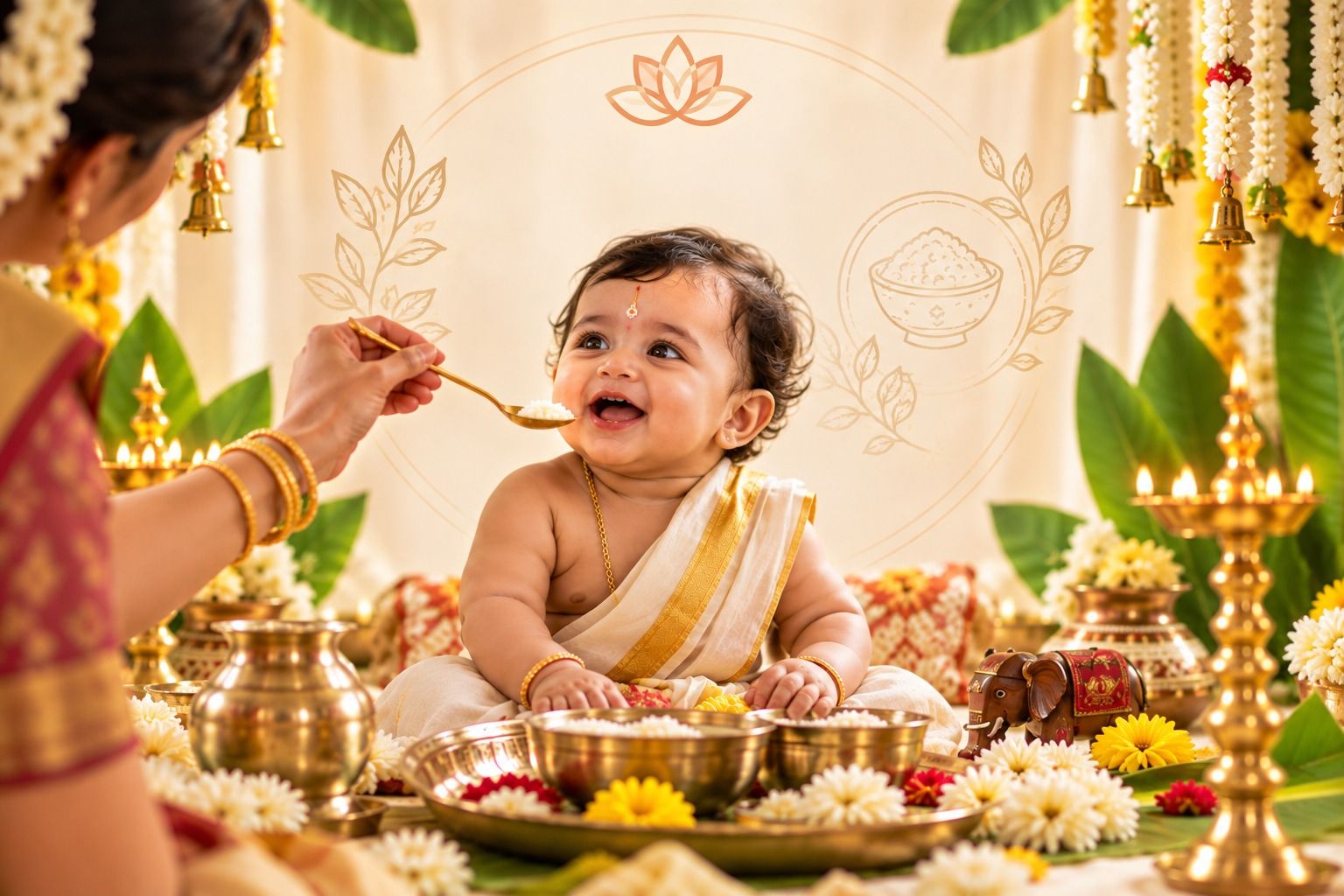
What Happens During an Annaprashan or Rice Ceremony?
While the traditions vary from family to family, some common elements are included in a typical ceremony.
1. Preparing the Baby
The baby is often dressed in traditional or special clothing chosen by the family. Other families may choose a special outfit for the event.
2. Prayer or Puja
The family may follow religious traditions and may pray and perform rituals to bring blessings to the child if the family is religious.
3. First Feeding
This is the main event of the ceremony. A parent, grandparent, or another family member ceremonially feeds the baby a small amount of rice, kheer, or another traditional food.
4. Blessings From Family Members
The baby is blessed by relatives and close family friends, and they wish them good health, happiness, prosperity, and a bright future.
5. Family Celebration
Families can have lunch or dinner, exchange gifts, take photos, and spend time together depending on the size of the event.
Can You Call Annaprashan a Rice Ceremony?
Yes, Annaprashan can be described as a rice ceremony, particularly when describing it to guests who are unfamiliar with the word. Both names are used to designate the special time in which a baby is given food solid enough to chew, typically rice or a rice porridge. If you're creating invitations, you can mix the two names together to make it clear and meaningful. For example:
"Annaprashan—Baby's First Rice Ceremony”
This title preserves the traditional name while helping guests understand the celebration. If your family has a certain regional tradition, you might want to use its local name, e.g., Mukhe Bhaat or Choroonu. By picking a suitable name, you can pay respect to the culture of your family and make the celebration accessible for everyone.
Final Thoughts
So, are Rice Ceremony and Annaprashan the same? Yes, they're used in most regular situations to refer to the same event—the baby's first day of solid food, typically rice. However, the traditional and cultural and religious name for it is Annaprashan, whereas "rice ceremony" is a general English description.
Exact customs, food, time, ritual, and name may vary greatly from region to region and family to family. Annaprashan, Rice Ceremony, Rice feeding for the baby, Mukhe Bhaat, Choroonu, or any other name you use, is a significant moment in a baby's new phase of development.

About the Author
Meet Durga Prasad Rath, the author of this blog. He has over 18 years of experience working in the food and drink industry with big global companies. Recently, he became an entrepreneur. He founded Narayani Foods and later started Ekatraa Assistance Private Limited. Ekatraa is a smart tech platform that uses AI to improve event services. His company is officially recognized by the Government of India and supported by IIT Bhubaneswar. Durga brings a wealth of business knowledge, leadership skills, and modern technology insights to his writing, helping readers understand market growth, business strategies, and tech innovation.
Frequently Asked Questions
Are the rice ceremony and Annaprashan the same?
Yes, they both celebrate the first time a baby eats solid food. "Annaprashan" is the traditional term, and "rice ceremony" is a general English term for this special day.
What is the main purpose of Annaprashan?
Annaprashan marks a baby’s transition to solid foods. Traditionally, it is a celebration that involves family members, blessing the child, and introducing them to rice or other food.
At what age is Annaprashan performed?
The celebration of Annaprashan is typically held during infancy, typically around 6 months old. The time will depend on family traditions, customs, and the baby's readiness to accept complementary foods.
Is rice compulsory during Annaprashan?
Rice is traditionally used in many Annaprashan ceremonies, but customs vary. Kheer, payasam, or soft food can be served based on regional and cultural preferences.
What are other names for the Rice Ceremony?
The ceremony is called Annaprashan in many Hindu families. Regional terms are "Mukhe Bhaat" in Bengal and "Choroonu" in Kerala; customs are different among communities and families.