
How many months to do the Annaprashan ceremony?

The Annaprashan ceremony is an important Hindu tradition that marks a baby's first introduction to solid food. Also known as the rice-feeding ceremony, it symbolizes the beginning of a new stage in a child's growth and development. It's a moment parents and families look forward to, celebrating milestones in their baby's life and asking for blessings from elders.
Traditionally, Annaprashan is performed when a baby is around 6 months old. The best window may, however, differ from baby to baby, family to family, and region to region. The ceremony can be used for 5 months, or it can be used for 7 or 8 months.
Let's learn about the suitable age for Annaprashan, auspicious times, local traditions, guidelines for its preparation, and all that parents need to know before arranging for this special event.
What Is the Annaprashan Ceremony?
Annaprashan is a traditional Hindu ritual celebrating the first solid food a baby should eat, typically rice or rice food. To take "Annapaashan" in Sanskrit means "Anna," which means food, and "Prashan," which means "Feeding."
A milestone is important for this ceremony because it signals the switch to complementary feeding. Traditionally, the event is celebrated with the prayers, blessing of their family, and some special meal.
In many families of India, Annaprashan may be conducted as a religious and cultural ceremony. Parents may invite relatives, prepare traditional dishes, decorate the venue, and seek blessings for the baby's health and prosperity.
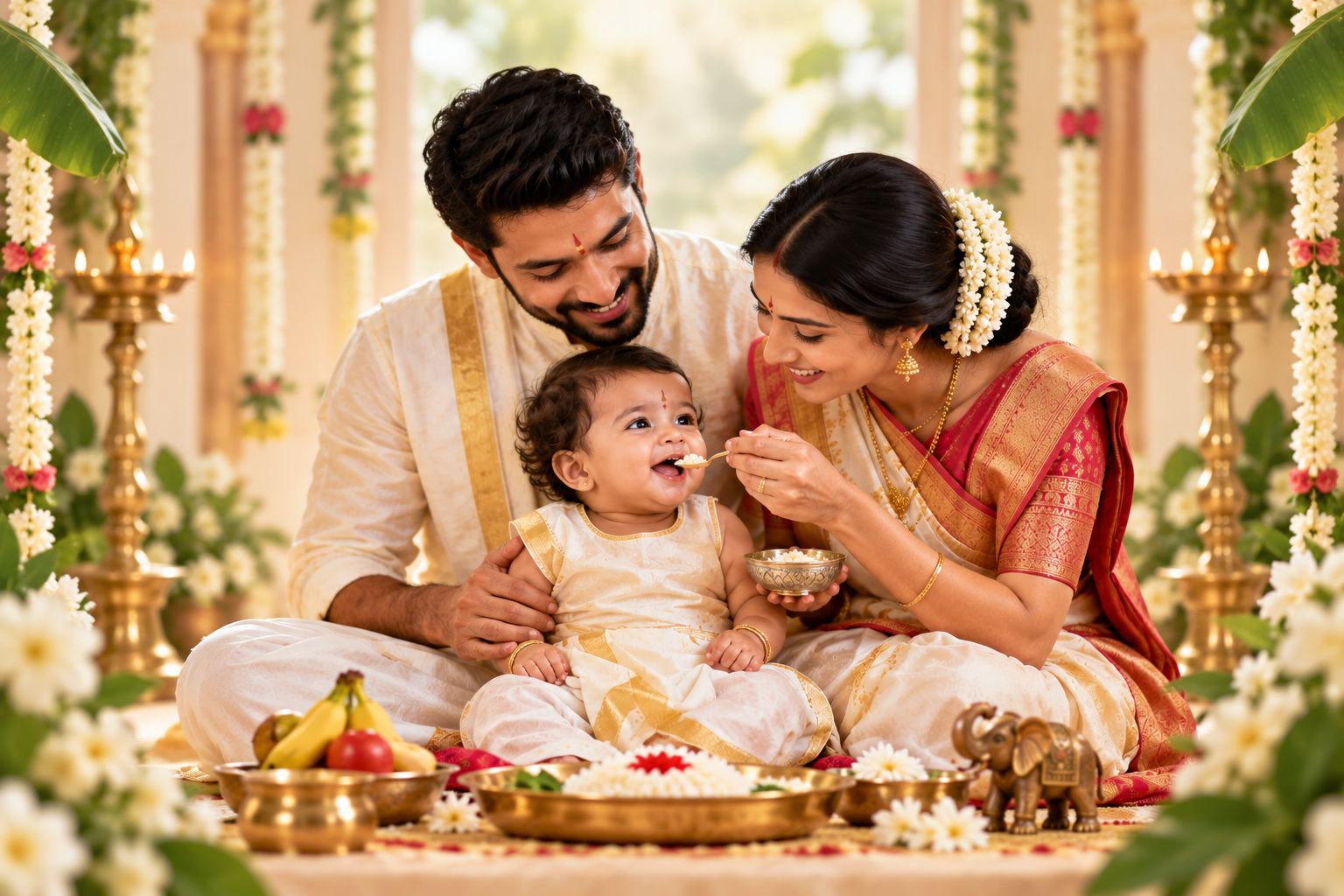
How Many Months to Do the Annaprashan Ceremony?
Annaprashan ceremony is completed at about 6 months of age in the life of a baby. This is also when many babies start to want complementary food in addition to breast milk or formula. But no particular age is followed by all the Hindu families. This may change depending on the time of year, family traditions, and if the baby is healthy or not.
Is 6 Months the Right Age?
The 6-month mark is a good age for introducing complementary feeding for many babies. Babies might begin sitting with assistance, be interested in food, and learn to coordinate to feed.
The ceremony itself doesn't have to come with the requirement that the baby has to consume a full meal right away. Parents can celebrate Annaprashan by giving a symbolic feeding and introducing foods as the child is ready.
Parents should ask their pediatrician before solids are introduced if the baby was born prematurely or has feeding problems or a medical condition.
Annaprashan Ceremony According to Hindu Traditions
Each Hindu family has their own rules regarding the timing of Annaprashan. The celebration may be arranged in some traditions based on the birth month, the lunar calendar, or the advice of a family priest.
1. Fifth-Month Annaprashan
Some families have Annaprashan at the end of the fifth month. In some communities, this practice is followed due to certain traditions and customs in the family and region.
2. Sixth-Month Annaprashan
The sixth month is one of the predominant months for Annaprashan. The families can choose an auspicious date for the month based on the Hindu calendar or the advice of a priest.
3. Seventh-Month Annaprashan
A few families choose not to include the 6th month until the 7th month. This can be determined from local traditions or the baby's growth.
4. Eighth-Month Annaprashan
The ceremony can be done towards the end of the eighth month in some communities. This is based on family tradition, religious beliefs, or the counsel of elders or priests.
All the babies need to have Annaprashan at a similar age, but it is not a universal Hindu rule. Families can follow their own cultural preferences and make sure the baby is prepared for complementary feeding.
How to Choose an Auspicious Date for Annaprashan?
Numerous Hindu families seek the help of a priest or astrologer to choose an auspicious day for the Annaprashan ceremony. The date may be kept as per Hindu Panchang and family traditions.
The following factors are typically taken into account:
Tithi
The Tithi is the lunar day of the Hindu calendar. There are particular things that some families want to perform for religious rituals.
Nakshatra
The date could be taken into account along with the birth Nakshatra of the baby. Depending upon the custom of the family, a family priest might recommend appropriate nakshatras.
Weekday
Some days of the week are suitable days for auspicious activities. Different traditions choose different means of prayer.
Muhurat
Muhurat refers to an auspicious time for performing a ceremony. The family can check with a priest if they choose to find out the appropriate time based on Panchang.
Family Tradition
There are particular traditions passed down through generations for some families. The moon, date, and form of the Annaprashan ceremony may be affected by these traditions.
Religious practices may be discussed with a trusted priest, but feeding is also considered when parents wish to follow religious practices.
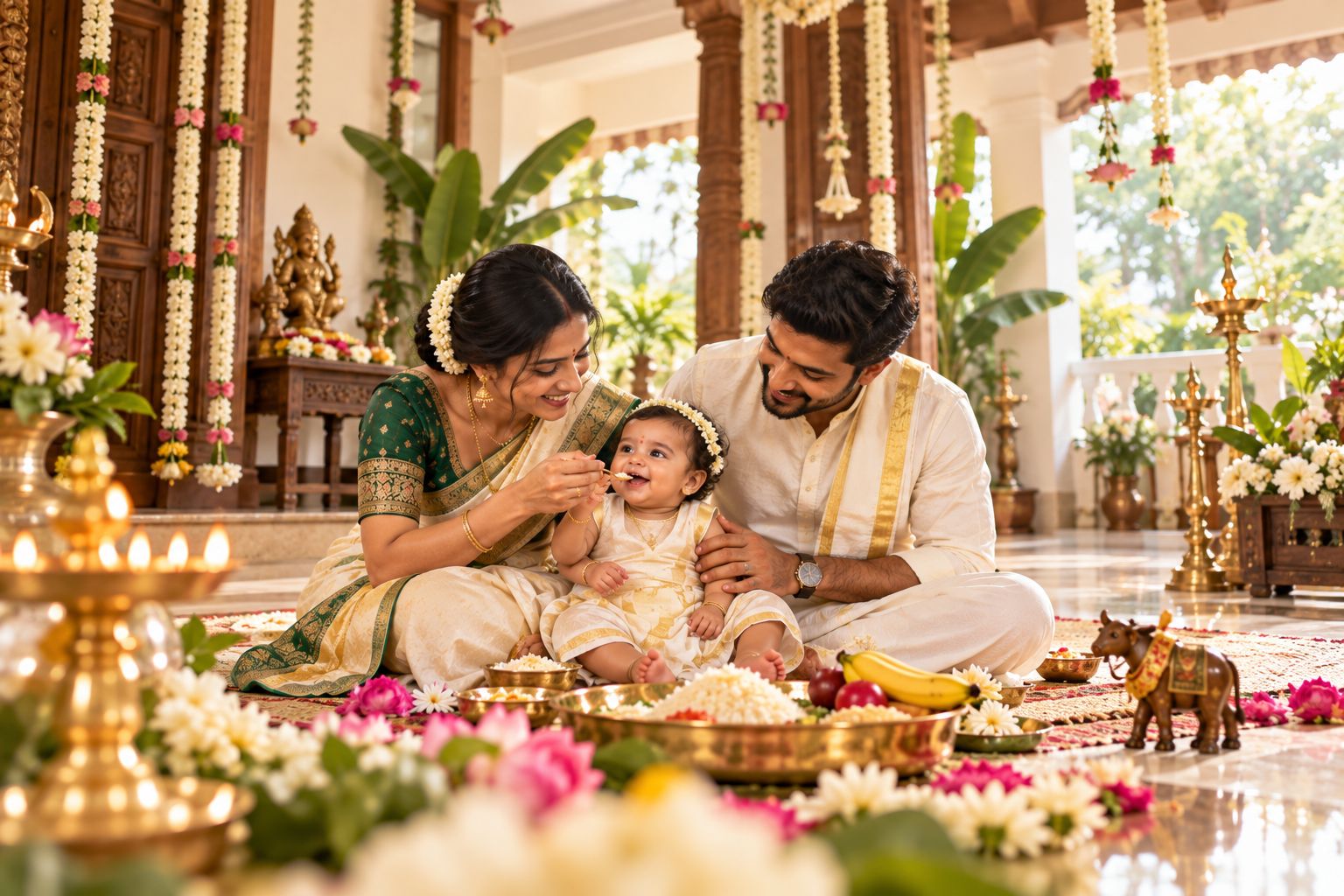
Annaprashan Ceremony Preparation Checklist
The event where parents and family members plan an Annaprashan can be a special experience. With a little preparation, the event is comfortable and enjoyable for everyone.
1. Select the Date
Decide when to have your baby's Annaprashan based on the baby's age, family traditions, and close relatives. In Hindu auspices, find out the auspicious date and muhurat with a priest.
2. Choose the Venue
This can take place in their home or a temple or a banquet hall or another appropriate location. Take the baby's comfort, travel time, and the number of guests all into consideration.
3. Plan the Rituals
Consult with your family priest about the rites in the ceremony. Prayers and blessings, havan, or symbolic feeding of the child may be included in the event, depending on the tradition.
4. Arrange Baby-Friendly Food
A baby's first feed should comprise soft foods appropriate for their development. Parents can be advised by a pediatrician on food and texture.
5. Prepare the Baby's Outfit
Traditional dress for families is used quite often. Choose clothing that is appropriate and enables infants to move around.
6. Make the Ceremony Comfortable
Don't make the event too lengthy or overwhelming. Large groups of children can cause babies to become tired or possibly restless in the setting, so allow a plan for breaks or some quiet area.
7. Capture the Memories
Photographs and video may be recorded to help preserve special moments. But, don't forget that it's about the baby's ease of use and notthe pictures they might be in or longer activities.
Can Annaprashan Be Done Before 6 Months?
Annaprashan is done before 6 months by some families due to religious custom/family tradition. It is, however, not usually advised to put solids into the infant's diet before 4 months of age. The parents of infants under 6 months of age should consult with a paediatrician before initiating complementary feeding.
Parents may conduct the religious ritual and symbolic foods and not begin regular solid food feeding until the baby is prepared. The time of the ceremony should be different from the baby's nutrition. Family traditions can be observed, and the infant's well-being is put first.
Can Annaprashan Be Done After 6 Months?
Yes. Some parents have the baby's first Annaprashan after 6 months. Depending on family customs, religion, and practical considerations, the ceremony could be conducted in either the 7th or 8th month!
For premature complementary feeding, the baby should not miss complementary feeding just because the ceremony has not yet been done. While this marks the baby's first food, regular complementary foods need to be introduced based on the needs of the baby and according to pediatrician guidance.
Conclusion
The Annaprashan Ceremony is celebrated on the sixth month of a kid's birth, which is an important stage in the baby's life. But the timing is subject to Hindu traditions and customs based on the region and family needs.
It is important for the parents to recall that Annaprashan is also a celebration of culture and a symbolic introduction to food. The actual start of complementary feeding should depend on the baby's developmental readiness and the paediatrician's advice.
Any of the 5th, 6th, 7th, or 8th months can be chosen, and the ceremony can be lovingly arranged, blessed, and made to be as welcoming as possible to the newborn. Explore suitable dates, traditional rituals, and celebration ideas to make this special milestone memorable for your family.

About the Author
Meet Durga Prasad Rath, the author of this blog. He has over 18 years of experience working in the food and drink industry with big global companies. Recently, he became an entrepreneur. He founded Narayani Foods and later started Ekatraa Assistance Private Limited. Ekatraa is a smart tech platform that uses AI to improve event services. His company is officially recognized by the Government of India and supported by IIT Bhubaneswar. Durga brings a wealth of business knowledge, leadership skills, and modern technology insights to his writing, helping readers understand market growth, business strategies, and tech innovation.
Frequently Asked Questions
How many months to do the Annaprashan ceremony?
Traditionally, the Annaprashan ceremony is done around six months of age. In some families, the fifth, seventh, or eighth month is observed according to regional traditions and family rituals.
Can Annaprashan be done in 5 months?
Yes, some families do have a fifth month Annaprashan. The baby should, however, not be introduced to solid foods before he or she is ready for them. Seek medical advice from a paediatrician for instructions on feeding.
Is 6 months compulsory for Annaprashan?
The 6-month time frame is not a mandatory timeframe for the religious ceremony. The family can select another month based on their own tradition. The baby's readiness for complementary feeding should be considered separately.
What is the first food given during Annaprashan?
Rice or soft rice-based food is traditionally associated with Annaprashan. Food should be appropriate for the infant's developmental age and provided safely and supervised.
Can Annaprashan be done after 7 months?
Yes, families are allowed to do Annaprashan on the day that they have decided after 7 months based on their custom. If the baby is ready for complementary feeding, regular feeding should not be delayed for the ceremony.