
Why is Annaprashan done by Mama?

The Annaprashan ceremony is one of the important traditional rituals performed during a baby’s early childhood. Annaprashan is the first feeding of solid food to a baby and is referred to as the first rice-feeding ceremony. Normally, the baby's maternal uncle is accorded a significant place in this ceremony, although this varies widely depending on region and community.
The baby is fed the first bite of rice or ceremonial food by the mama in several families. This is not just about giving the child food. It is symbolic of the special relationship between the maternal uncle and his sister's child and has cultural and emotional value.
It is worth noting, however, that the practice of having the Mama perform the ritual is not strictly a religious obligation. Each community has its own traditions, and in some cases, the parents or grandparents or another close relative might do the initial feeding.
What is the Annaprashan Ceremony?
Annaprashan is a ritual in Hindu culture that marks a baby's ability to take solid food instead of milk. From Sanskrit, "Annaprashan" means "food" or "rice," and "Prashana" means "eating" or "consumption."
It is usually done when the baby is developmentally prepared to eat complementary foods. The exact timing depends on family traditions, local customs, and the child's development.
In Indian culture, rice is traditionally believed to be a symbol of nourishment, prosperity, and abundance, so it is often used. The ceremony can involve prayers, blessings, family gatherings, traditional attire, and more, depending on the family and location.
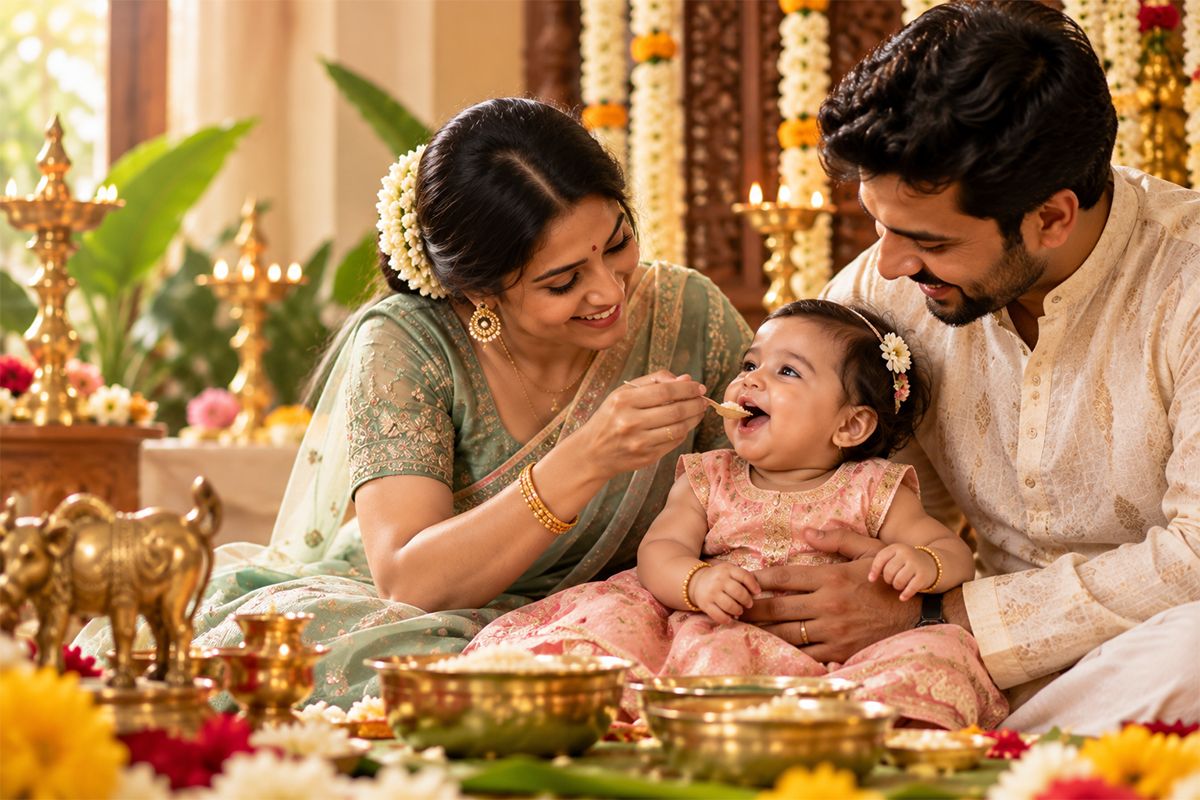
Why Does Mama Feed the Baby During Annaprashan?
Many of the traditions of Indian families place a special emphasis on the maternal uncle. Therefore, his participation in the Annaprashan ceremony is considered meaningful.
1. It Represents the Maternal Family's Blessings
The mother plays a significant part in several childhood rituals of traditional Indian families. The blessings, love, and support of the mother's family are symbolized by Mama's participation.
The first bite can mean the maternal family's wishes for the baby's health and wealth. The ritual is thus no longer just a feeding ritual. It brings together both sides of the family to celebrate the child's milestone.
2. It Celebrates the Bond Between Mama and Bhanja or Bhanji
The relationship between a maternal uncle and his sister's child has traditionally been given special importance in Indian culture. The mama is often considered a loving and protective figure in the child's life.
Annaprashan is an event that can be remembered by having him feed the baby, which symbolizes this relationship. It is also an emotional process of introducing the child to the extended maternal family for many families.
3. It Symbolizes Love and Protection
Traditional ceremonies may be based on familial relationships to convey blessings and good wishes. The Mama feeding the baby can then represent his affection and protection.
The first bite is offered with the hope that the child will grow up in the context of love, care, and family support. This symbolism is significant because Annaprashan marks the start of a new phase in the baby's life.
4. It Gives the Maternal Family an Important Role
Both the maternal and paternal sides of the family may be involved in Indian family rituals. In some communities, the maternal uncle is overtly assigned a special duty; thus, the mother's family has a presence in the celebration as well.
The Mama can bring gifts, be involved in prayers, bless the child, or feed the child first. This helps make Annaprashan a shared family celebration rather than an event limited to the baby's parents.
5. It Is a Long-Standing Family Tradition
One of the biggest reasons Mama feeds the baby during Annaprashan is simply tradition. Rituals are often passed from one generation to another. If grandparents and parents adhere to the same tradition, it can be carried on to the next generation.
This practice can be quite different in each family. One family may have such a strong tradition that the mama must be involved, and another family may not.
Is It Compulsory for Mama to Perform Annaprashan?
No. The Mama feeding the baby is not a compulsory rule for every Annaprashan ceremony.
Hindu rituals may vary from place to place, community to community, family to family, and from local practice to local practice. No one format is followed by all Hindu families. Sometimes the initial bite is from the maternal uncle in some families. In others, the baby's father or mother will do it. Grandparents or other trusted family members can be involved.
So, families should not think that the ceremony is missing when the Mama can't come or can't do the feeding ceremony. Annaprashan is to mark the child's entry into complementary feeding with blessings and good wishes from loved ones.
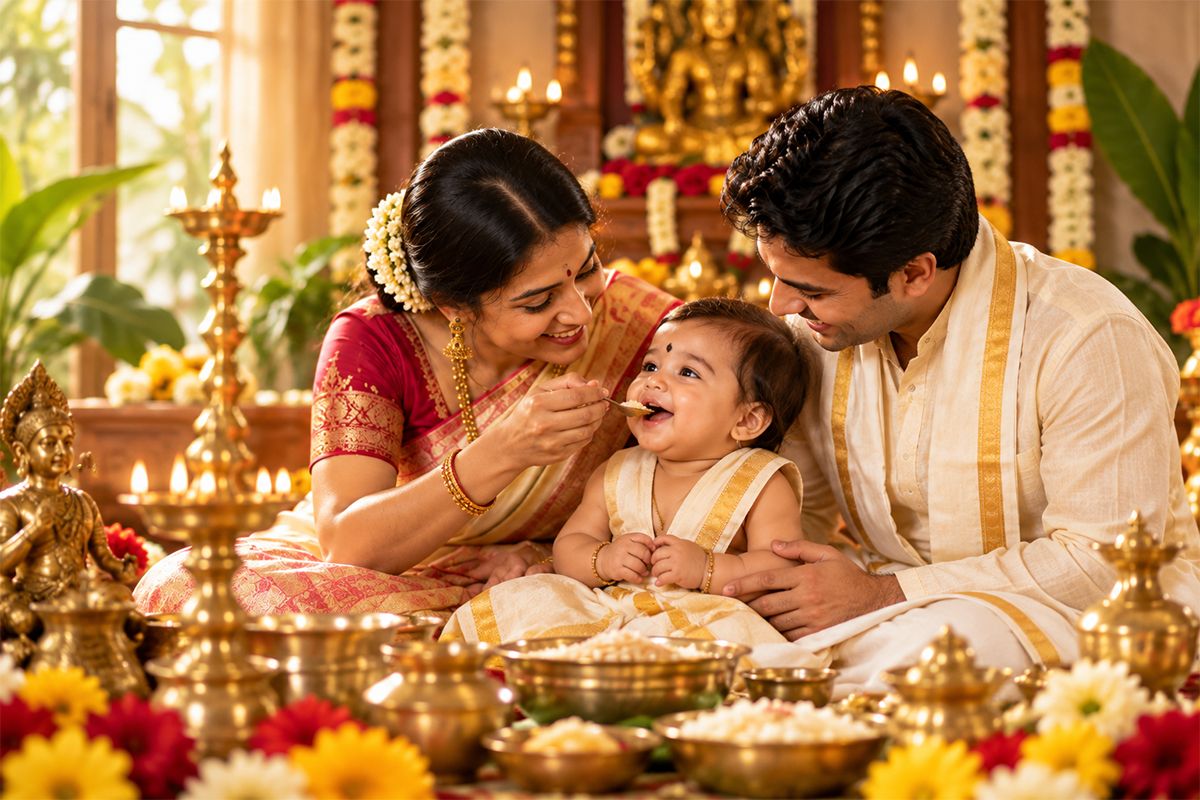
When Is the Annaprashan Ceremony Performed?
The timing of Annaprashan is different in different families and communities. In the past, it has been seen to be carried out when the baby is considered ready to begin solid or complementary feeds. The exact month can vary depending on the region, family traditions, and sometimes astrological reasons.
Factors to consider are the parents' developmental readiness as well as the baby's developmental readiness today. The ceremony may be scheduled on the family's usual calendar as long as the actual food is right for the child.
Parents should not make a child eat something just because it is part of a ceremony if the child is not developmentally ready to eat it.
Why Is Mama's Role More Common in Some Families?
India has a wide variety of cultural traditions. There are variations in practice in different states, communities, and even within each family on Annaprashan.
In certain traditions, the maternal uncle plays a specific part in ceremonies concerning his sister's children. In other families, the family of the father might have more ceremonial roles.
This is why there is no single answer that applies to every Annaprashan ceremony. The practice of Mama feeding the baby is seen as a symbol of the maternal family's love and blessing, not a universal religious duty.
What If the Mama Cannot Attend?
There is no reason to cancel the celebration just because the maternal uncle cannot make it. Families are free to do their own thing and select another close family member to join in. Parents, grandparents, or other relatives can do ceremonial feeding as per a family's tradition.
What is important is the intent behind the ritual: the family's blessings, love, and celebration of the baby's development. If the family practices a particular regional or religious tradition, they can ask an elder or priest about the traditional alternatives.
Annaprashan Is More Than the First Bite
The Annaprashan ceremony marks an important change in the life of the child. It connects family members in a celebration of growth, nourishment, and new beginnings.
A gesture has extra emotional weight when the mama gives the first bite. It signifies the bond between the maternal uncle and the child, as well as the maternal family's blessings being introduced into the milestone.
Families should also keep in mind that there are many traditions. In many families, feeding the baby by its mother is a highly valued practice and not a must in all Annaprashan ceremonies.
The most meaningful celebration is one that respects the family's traditions while keeping the baby's health, comfort, and developmental needs at the center.

About the Author
Meet Durga Prasad Rath, the author of this blog. He has over 18 years of experience working in the food and drink industry with big global companies. Recently, he became an entrepreneur. He founded Narayani Foods and later started Ekatraa Assistance Private Limited. Ekatraa is a smart tech platform that uses AI to improve event services. His company is officially recognized by the Government of India and supported by IIT Bhubaneswar. Durga brings a wealth of business knowledge, leadership skills, and modern technology insights to his writing, helping readers understand market growth, business strategies, and tech innovation.
Frequently Asked Questions
Why does Mama feed the baby during Annaprashan?
Mama is the symbol of love and blessing from the maternal family in many families. His feeding the baby symbolizes the special bond between the maternal uncle and his sister's child.
Is Mama feeding the baby compulsory in Annaprashan?
No, it is not a must for all families; mama feeding the baby is a family tradition. The feeding of the first meal may be done by parents, grandparents, or another family member.
What food is traditionally given during Annaprashan?
The use of rice or a rice dish is a traditional practice for Annaprashan. Parents should make sure any food served matches the baby's age and nutritional requirements.
What does Annaprashan symbolize?
Annaprashan literally means the transition of a baby to solid/complementary feeding. It is also a symbol of nourishment, growth, prosperity, family blessings, and a new development stage.
Can Annaprashan be performed if Mama is unavailable?
Yes. Families may use their own customs and request another family member to feed the baby ceremoniously. The absence of Mama doesn't make the ceremony incomplete.
Is Annaprashan the same in every Indian family?
No. Annaprashan traditions vary by region, community, family customs, and religious practices. It can happen at any time, with special ceremonies, various foods, and who feeds the baby.